
The Nahual: Legends, Lore, and Living Folklore of Mesoamerica
Spiritual guardian or Shape shifting servants of darkness
5/2/20262 min read
The Nahual: Legends, Lore, and Living Folklore of Mesoamerica
Throughout Mexico and Central America, ancient legends speak of a mysterious being known as the Nahual—a human with the supernatural ability to transform into an animal. Sometimes called a nagual or nāhualli, this shapeshifter is one of the most powerful and enduring figures in Mesoamerican folklore, blending mythology, spirituality, and ancestral belief systems that persist into modern times.
Often described as both protector and menace, the Nahual occupies a liminal space between worlds: human and animal, natural and supernatural, fear and reverence.
Origins of the Nahual Legend
The Nahual belief originates in pre‑Columbian Mesoamerican civilizations, particularly among the Nahua, Aztec, Zapotec, Mixtec, and Maya peoples. The concept is closely tied to shamanism, spiritual duality, and calendrical birth beliefs, where each person is born with an animal spirit companion known as a tonal.
Early depictions of transforming figures appear in ancient codices such as the Borgia Codex, where humans are shown partially or fully transforming into animals, lightning, or wind—symbols of sacred power rather than curse or monstrosity.
Where the Nahual Is Known and Reported
Nahual legends are widely associated with specific regions, cities, and rural communities, including:
Mexico
Oaxaca (Zapotec and Mixtec regions)
Veracruz
Puebla
Chiapas
Guerrero
Rural towns near the Sierra Madre ranges
Central America
Guatemala (particularly in Mayan highland communities)
El Salvador
Honduras
Southern Mexico–Guatemala border regions
Oral accounts collected in these areas describe encounters with unexplained animals behaving with human intelligence, often near villages, farms, or forested paths at night.
What the Nahual Is Supposed to Look Like
Descriptions of the Nahual vary by region, but folklore consistently paints an unsettling, vivid image.
In Its Animal Form
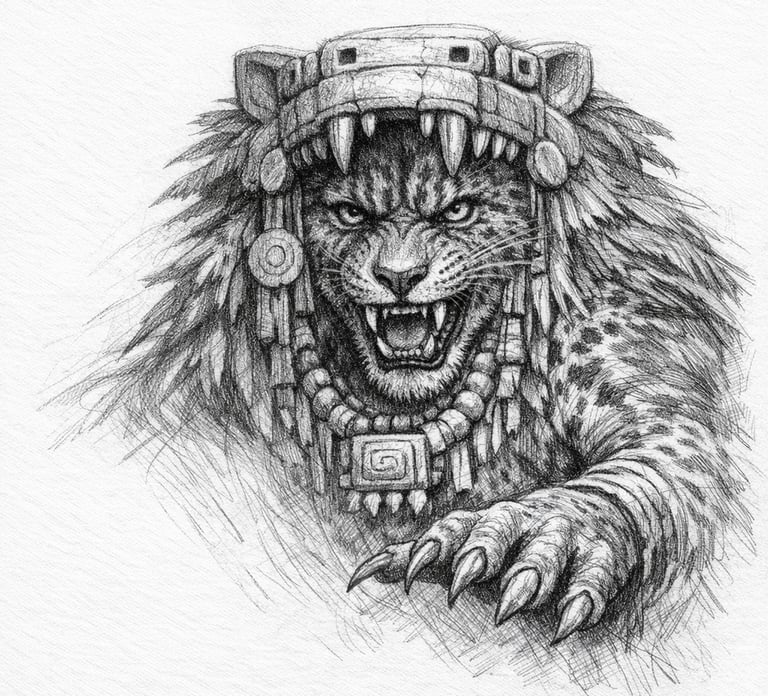
Nahuales most commonly transform into jaguars, coyotes, dogs, wolves, turkeys, owls, or bats, depending on cultural region and spiritual role.
Witnesses often describe:
Eyes that glow unnaturally—red, amber, or reflective white
Animals larger or darker than normal, with distorted proportions
Movement that feels “intentional,” as if the creature is watching, not wandering
Silent or unnatural footsteps, especially on dirt or stone
In some legends, an injured animal is later discovered to correspond to a wounded human in the community, reinforcing belief in their dual nature.
In Human or Transitional Form
In partial transformations, the Nahual may appear as:
A person with animal claws or fur still visible
Eyes that never fully lose their animal gleam
Shadows that do not match human shape
A lingering smell of earth, smoke, or blood
These liminal forms appear frequently in ceremonial art and oral storytelling.
Protector, Healer, or Dark Shapeshifter?
Contrary to later colonial portrayals, Nahuales were traditionally viewed as spiritual guardians and healers. Shamans and elders were believed to use this ability to:
Protect villages
Guide lost souls
Heal illness
Communicate with the spirit world
However, colonial influence reframed Nahuales in some regions as witches or servants of dark forces, leading to modern legends where they are blamed for livestock deaths, unexplained injuries, or nighttime encounters meant to frighten children into obedience.
Why the Nahual Endures
The Nahual survives because it represents a core Mesoamerican worldview: humans are not separate from nature—they are deeply entwined with it. The legend endures in rural communities, oral history, academic study, and modern myth because it speaks to:
Spiritual duality
Respect for animals and land
The danger and responsibility of power
Whether feared, revered, or studied, the Nahual remains one of the most compelling figures in Indigenous American legends.
References: [oldfolklore.com], [en.wikipedia.org], [folklore.usc.edu], [dosmundos.com], [culturacolectiva.com], [dosmundos.com]