
The Tlahuelpuchi
4/29/20262 min read
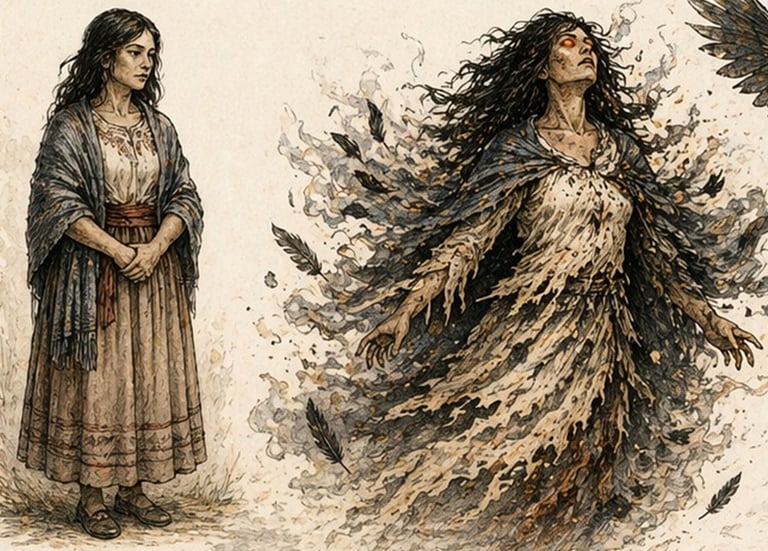
The Tlahuelpuchi: Hunger Woven Into Blood
In some remote villages of Tlaxcala, Mexico there is a name spoken softly, often only after sunset: the Tlahuelpuchi.
According to tradition, the Tlahuelpuchi is not made through magic or choice—it is born. As a child, it appears almost ordinary. It may seem shy or withdrawn, perhaps prone to wandering at night or staring too long into the darkness. Nothing about it openly signals danger. Families often dismiss early signs as temperament or illness, unaware that something ancient sleeps within.
That changes at adolescence.
When the hunger awakens, it is relentless. The Tlahuelpuchi is said to sustain itself by feeding on the life force of infants, slowly draining them over many nights. Unlike sudden violence, its cruelty is quiet and intimate—felt as weakness, pallor, and an unshakable cold.
One of the most enduring stories tells of a family whose newborn began to fade despite constant care. Every morning, the baby was weaker than the night before—pale, lethargic, and cold to the touch. The parents prayed, the healer visited, yet nothing helped.
One night, the father remained awake by the fire. Near dawn, he heard a soft rustling above the house. Stepping outside, he saw a massive bird perched on the roof, its eyes glowing like embers in the dark. When he shouted, the creature took flight, dropping behind it feathers that shimmered unnaturally in the moonlight.
The village healer confirmed what the family already feared: a Tlahuelpuchi had marked their child.
The family protected their home with salt, scissors, and prayers—traditional measures believed to confuse or repel the creature. Days later, a quiet neighbor took ill and died suddenly. Only then did the truth emerge. She had been the Tlahuelpuchi. Prevented from returning home before dawn, she was unable to reunite with her hidden skin and perished.
Stories like this endure because they carry a warning.
The Tlahuelpuchi is not merely a witch in disguise but a being bound by ancient rules—creatures of transformation, secrecy, and hunger older than living memory. They are said to remove their skin at night, taking on animal forms—often birds—to hunt unseen. If their skin is discovered or destroyed, they cannot survive the sunrise.
In Tlaxcala, these tales persist not only as superstition but as cultural memory. They remind listeners that danger may wear a familiar face, and that some hungers are inherited rather than chosen.
Even today, people say that if a baby grows weak without reason, or if strange feathers are found near a home at dawn, it’s best not to dismiss old stories too quickly. Some legends are whispered because they are meant to be remembered